Giardia IC
Rapid Test for the determination of the Giardia lamblia antigen
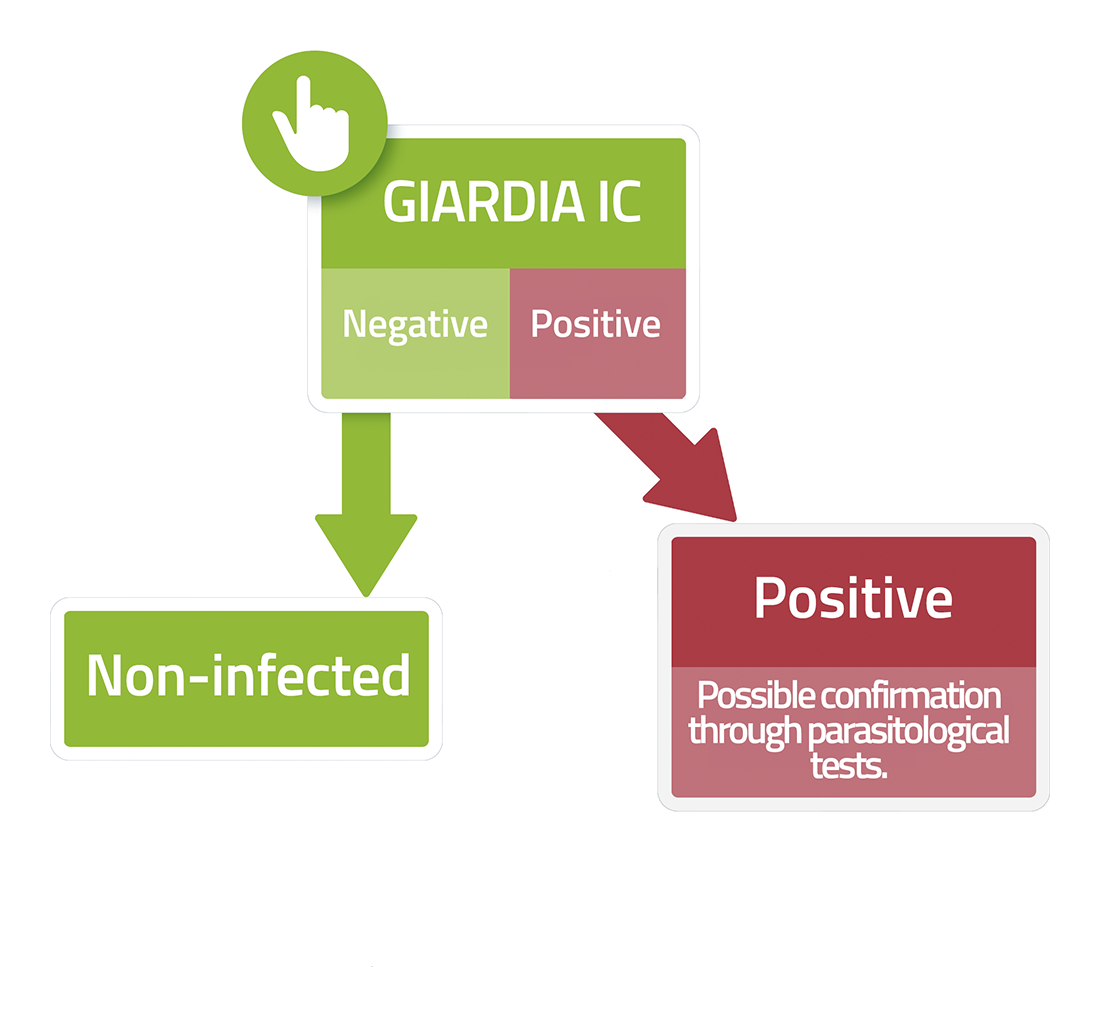
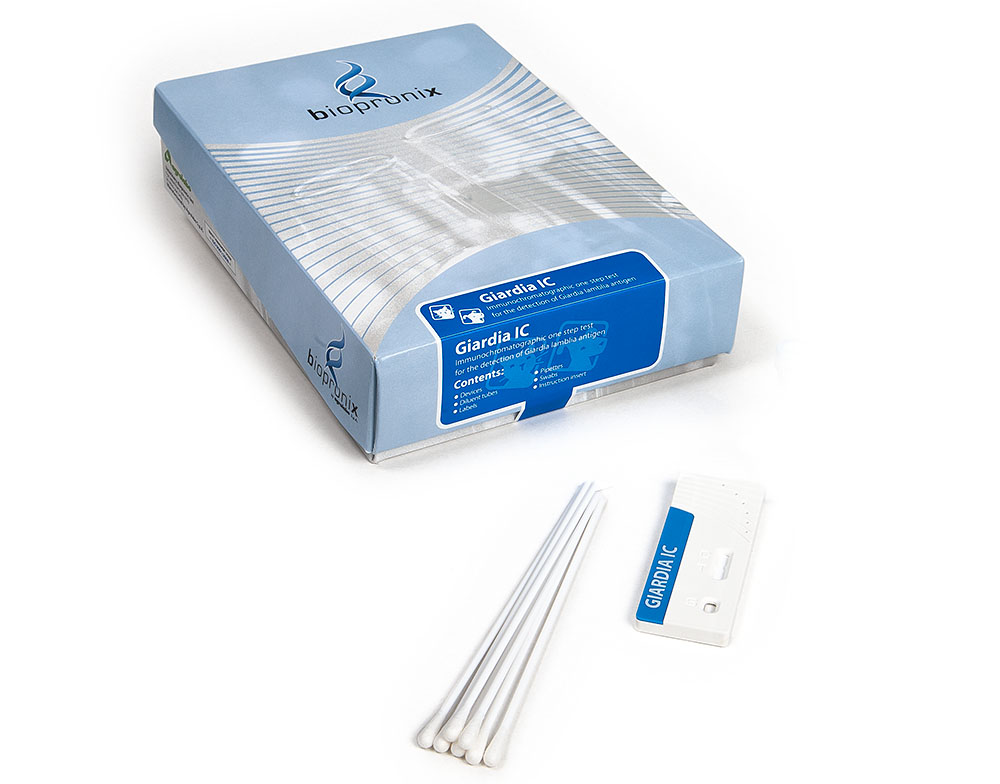
Giardia IC is an immunochromatographic test for the detection of the Giardia lamblia antigen in canine and feline faeces samples.
Giardiasis (or lambliasis) is an infection caused by ingesting Giardia duodenalis (or lambia) cysts. Giardia is a flagellated protozoan (trophozoite) that can cause zoonosis, causing health problems in humans and animals. The clinical picture results from both the interaction between the parasite and the intestinal mucosal barrier and from involvement of the immune system.
1.Alteration of the intestinal barrier and tight junctions
One of the main pathogenic mechanisms of giardiasis is compromised intestinal epithelial integrity.
- Molecules secreted by the parasite: Trophozoites release numerous excretory and secretory products (ESPs), including proteolytic enzymes and other bioactive molecules capable of interacting directly with enterocytes. These factors contribute to altering mucosal function and the normal organization of epithelial cells.
- Compromised cellular junctions: Several studies have shown that infection can cause changes in tight junctions, key structures that regulate permeability between intestinal epithelial cells. Among the proteins most affected are Zonula Occludens-1 (ZO-1), claudins, and other proteins associated with intercellular junctions. Their alteration leads to increased intestinal permeability ("leaky gut"), favoring the passage of antigens and molecules present in the lumen towards the lamina propria.
- Functional consequences: Alteration of the mucosal barrier contributes to secretory diarrhea, malabsorption, activation of the local immune response, and alteration of intestinal homeostasis. These phenomena can occur even in the absence of extensive necrotic lesions of the epithelium.
2.Arginine Metabolism and Enterocyte Functional Damage
- Arginine Metabolism: Among the most studied metabolic mechanisms in recent years is the parasite's use of arginine. Giardia utilizes this amino acid through the enzyme arginine deiminase (ADI), which is essential for its energy metabolism.
- Implications for Nitric Oxide Production: Reducing local arginine availability can affect enterocyte physiology, as this amino acid is an important precursor for the synthesis of nitric oxide (NO) and participates in cell proliferation and repair. This metabolic deprivation can contribute to mucosal functional damage and malabsorption due to slowed epithelial turnover, cell cycle alterations, and increased enterocyte apoptosis.
3.The Role of the Immune Response in Intestinal Villi Remodeling
Intestinal damage results from the interaction between parasite activity and the local immune response.
- Flattening of the intestinal villi is one of the most frequently observed histological changes in giardiasis. This phenomenon also results from the activation of intraepithelial T lymphocytes, especially the CD8+ population, which contribute to changes in the normal balance between proliferation and renewal of the intestinal epithelium.
- Clinical outcomes: Flattening of the intestinal villi leads to a reduction in the available absorptive surface area and can contribute to the development of malabsorption, weight loss, and chronic diarrhea.
4.Antigenic variation and persistence of infection
One of the most interesting biological characteristics of Giardia duodenalis is its ability to periodically modify its surface proteins.
- Variant Surface Proteins (VSP): The surface of the trophozoite is coated with Variant Surface Proteins (VSP). Although the genome contains numerous genes encoding these proteins, the parasite predominantly expresses one at a time through sophisticated gene expression regulation mechanisms. During the course of infection, a progressive change in the expressed VSPs (antigen switching) may occur, resulting in a modification of the antigens recognized by the immune system.
- Evasion of the antibody response: The production of secretory IgA is one of the main mechanisms controlling giardiasis. The change in VSPs allows the parasite to reduce the effectiveness of the antibodies already produced, favoring the persistence of the infection and explaining, at least in part, the appearance of chronic or relapsing forms in some individuals.
5.Interaction with the intestinal microbiota
Numerous studies have shown that Giardia can influence the composition and function of the intestinal microbiota.
- Giardia infection can be associated with dysbiosis, with changes in bacterial populations and the intestinal metabolic profile. Following the parasite's interaction with the intestinal mucosa, alterations in intestinal fermentation, changes in the production of microbial metabolites, changes in the mucosal immune response, and a delay in the recovery of normal intestinal function can occur.
- In some individuals, resolution of the infection does not coincide with the complete restoration of the mucosal and microbiota balance. This may contribute to the persistence of gastrointestinal symptoms even after elimination of the parasite (Irritable Bowel Syndrome or IBS), although the responsible mechanisms and their clinical relevance are still being studied in veterinary medicine.
Bibliography
- Bartelt, L.A., et al. (2015). " Advances in understanding Giardia: determinants and mechanisms of chronic sequelae. F1000Prime Rep. 7:62.
- Boucard, A.S., et al. (2021) Age and Giardia intestinalis infection impact canine gut microbiota. 9(9):1862.
- Buret, A. G. (2007) Mechanisms of epithelial dysfunction in giardiasis. Gut, 56(3), 316-317.
- Kuzi, S., et al. (2024) Giardiasis and diarrhea in dogs: does the microbiome matter? J Vet Intern Med. 38(1):152-160.
- Nash, T. E. (2002) Surface antigenic variation in Giardia lamblia." Molecular Microbiology, 45(3), 585-590.
- Troeger, H., et al. (2007) Effect of chronic Giardia lamblia infection on epithelial transport and barrier function in human duodenum. Gut, 56(3), 328-335.
- Scott, K.G., et al. (2004) Role of CD8+ and CD4+ T lymphocytes in jejunal mucosal injury during murine giardiasis. Infect Immun. 72(6):3536-42.
Most infections in which cysts pass in the faeces are asymptomatic. However, sometimes the symptoms can become manifest, especially in puppies and kittens, in elderly animals, in debilitated animals, in those suffering from other diseases (for example cats with FIV and FeLV), in those with multiple intestinal worms.
The main symptoms are:
- diarrhea (acute, liquid, manifesting as a single very strong discharge or with multiple and repeated discharges)
- weight loss
- mucous and foul-smelling stools, sometimes with blood streaks
- sometimes lethargy in cats
- decreased appetite
- stunted growth.