FCoVCHECK Ab ELISA
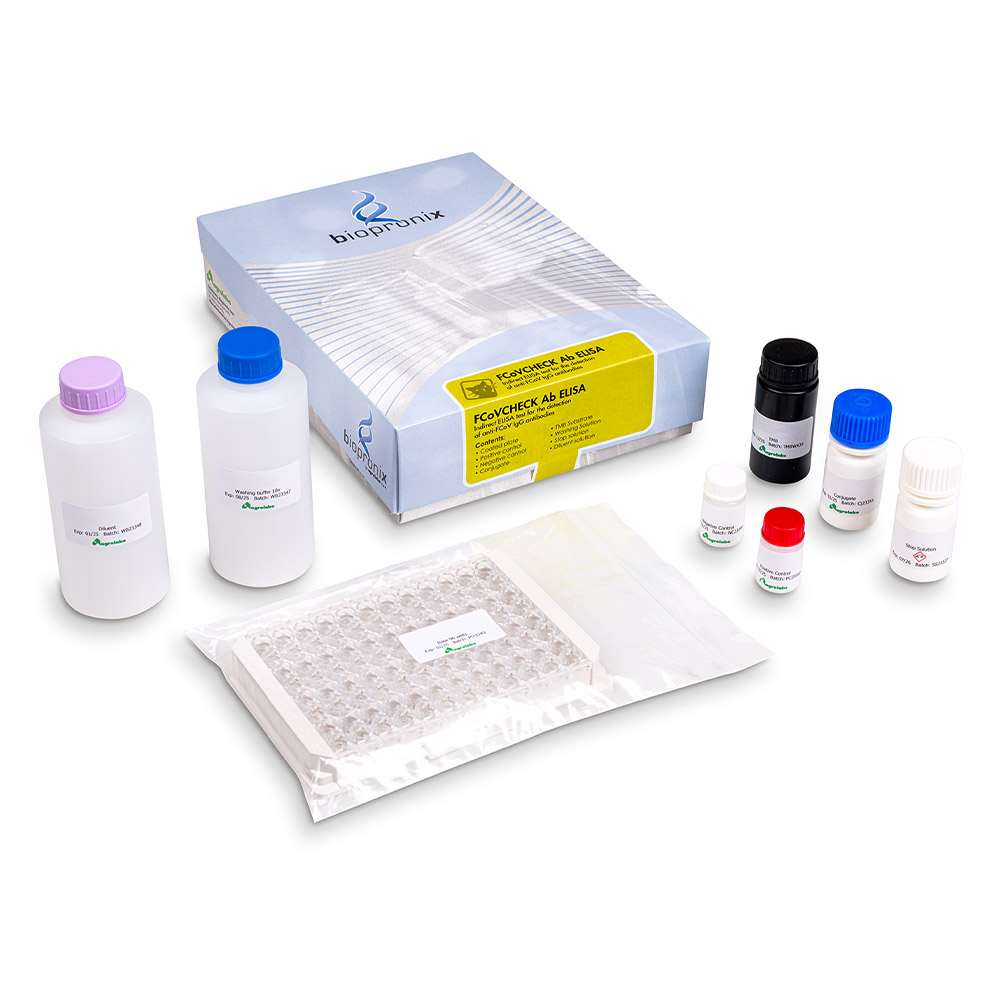
ELISA kit for the detection of anti-feline Coronavirus antibodies
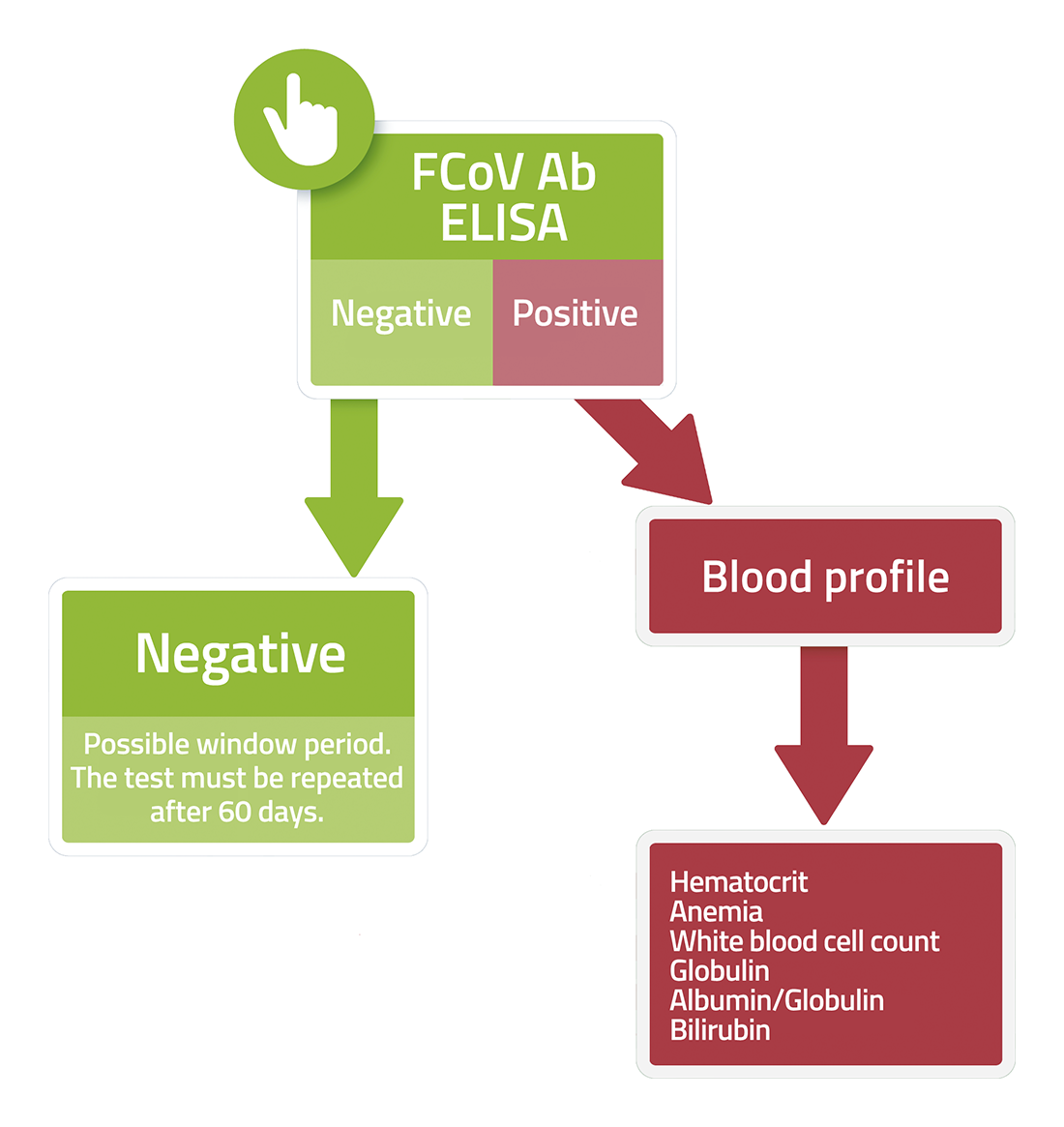
This kit is based on the indirect ELISA immunoassay technique for the detection of anti-FCoV antibodies in feline serum or plasma.
Compared to the reference test, FCoVCHECK Ab agreed at 96.4%, with 93.5% sensitivity (95% confidence interval (CI): 83.5% – 97.9%) and 100% specificity (95% CI: 90.8% – 100%). This new test agreed at 93.6% with ImmunoComb FCoV and 82.7% with INgezim Corona Felino.
The new ELISA test FCoVCHECK Ab correctly identifies positive and negative samples with a good correlation with IFAT, making it a good diagnostic aid for FIP.
References:
- DEVELOPMENT OF A NEW ELISA TEST FOR THE DETECTION OF ANTIBODIES ANTI-FELINE CORONAVIRUS AS A DIAGNOSTIC SUPPORT FOR FELINE INFECTIOUS PERITONITIS (FIP)
Irene Ferrero(1), Sarah Dewilde(2), Paolo Poletti(1), Barbara Canepa(2), Enrica Vittoria Giachino(1), Paola Dall'Ara(3), Joel Filipe(3)
(1) Agrolabo S.p.A, Research And Development, Scarmagno (TO), Italy, (2) Gem Forlab SRL, R&d, Caluso, Italy, (3) Università degli Studi di Milano, Medicina Veterinaria E Scienze Animali, Lodi, Italy
48th World Small Animal Veterinary Association Congress and 28th FECAVA Eurocongress - Development of a New Indirect ELISA Test for the Detection of Anti-Feline Coronavirus Antibodies in Cats
Irene Ferrero(1), Sarah Dewilde(2), Paolo Poletti(1), Barbara Canepa(2), Enrica Giachino(1), Paola Dall'Ara(3), and Joel Filipe(3)
(1) Agrolabo S.p.A., 10010 Scarmagno, Italy
(2) Gem Forlab S.r.l., 10014 Caluso, Italy
(3) Department of Veterinary Medicine and Animal Sciences, University of Milan, 26900 Lodi, Italy
Veterinary Scinces, Vet. Sci. 2025, 12, 245.
https://doi.org/10.3390/vetsci12030245
Feline infectious peritonitis (FIP) is a serious systemic disease caused by specific variants of feline coronavirus (FCoV). For many decades, it was considered an almost invariably fatal disease, attributed to the emergence of random mutations in feline enteric coronavirus (FECV), which led to its transformation into the highly pathogenic variant responsible for FIP, known as FIPV.
The most recent findings in molecular virology, along with the development of effective antiviral drugs, have profoundly changed the understanding of the disease. Today, FIP is interpreted as the result of specific modifications of the virus that alter its cellular tropism and its relationship with the immune system, favoring the systemic spread of the infection.
1.The Role of the Spike Protein and the Furin Cleavage Site
One of the most important aspects to emerge from the research concerns the Spike (S) protein, the protein that allows the coronavirus to recognize and penetrate host cells.
- The Spike Protein: The most recent evidence indicates that the onset of FIP is associated with localized changes in a crucial region of the Spike protein, known as the S1/S2 junction, which includes the cleavage site for furin, a cellular enzyme involved in the activation of the viral protein.
- Tropism: In enteric coronavirus (FECV), the Spike protein promotes infection of enterocytes, the cells of the intestinal mucosa. Alterations affecting the furin cleavage site modify the biological characteristics of the Spike protein, allowing the virus to change its cellular tropism. As a result of these changes, the virus progressively loses the ability to replicate primarily in the intestine and acquires the ability to infect monocytes and macrophages, key cells of the immune system. Infection of these cells represents a crucial step in the development of FIP. Through macrophages, the virus can spread throughout the body, reaching numerous organs and tissues and triggering the inflammatory response responsible for the clinical manifestations of the disease, including the effusive ("wet") and non-effusive ("dry") forms.
2.The Antibody Paradox: The ADE Phenomenon in FIP
In understanding viral infections, the presence of specific antibodies is generally associated with greater protection. In the case of FIP, however, the relationship between antibodies and disease can be much more complex. In some conditions, antibodies produced against FCoV may fail to neutralize the virus and, instead, promote its spread through a mechanism known as ADE (Antibody-Dependent Enhancement).
- The Role of Fc Receptors and Macrophage Infection: After a previous infection with enteric coronavirus, cats may develop antibodies against FCoV. If a viral variant associated with FIP (FIPV) subsequently appears, these antibodies may bind to the virus without effectively eliminating it. The virus-antibody complex can be recognized by Fc receptors on the surface of monocytes and macrophages, cells of the immune system normally responsible for capturing and degrading foreign agents. In this case, however, the antibody-receptor binding facilitates the virus's entry into the target cell, transforming a normal immune defense mechanism into a gateway for infection.
- Disease progression: The ADE phenomenon increases the efficiency with which the virus infects macrophages, the key cells in the systemic spread of FIPV. This contributes to the progression of the infection and the development of the inflammatory response responsible for the typical lesions of FIP. Understanding this mechanism has been crucial in the development of vaccination strategies. Initial attempts to develop a systemic vaccine against FIP have encountered significant difficulties precisely because of the risk that an inadequately protective antibody response could promote the infection rather than counteract it.
3.Vascular Endothelial Growth Factor (VEGF) and "False" Peritonitis
FIP is not primary peritonitis in the strict sense, but rather a systemic immune-mediated disease characterized primarily by vasculitis and phlebitis associated with macrophage infection by feline infectious peritonitis virus (FIPV).
A particularly characteristic feature of the effusive ("wet") form of FIP is the accumulation of large amounts of fluid in body cavities, especially in the abdominal and pleural cavities. The origin of this effusion is linked to complex mechanisms of altered vascular function, in which vascular endothelial growth factor (VEGF) plays a central role.
- Reprogramming of infected macrophages: After FIPV infection, the macrophage becomes the primary vehicle for viral spread throughout the body. The virus not only replicates within the cell but profoundly alters its functional state, inducing a cellular response characterized by increased production of inflammatory mediators and angiogenic factors, including VEGF.
- Pathological increase in vascular permeability: VEGF is a potent regulator of vascular endothelial permeability. When overproduced, it leads to a loss of endothelial barrier integrity, causing the junctions between endothelial cells to open and promoting the leakage of plasma and proteins from blood vessels into the extracellular spaces and body cavities.
- Effusion formation in effusive FIP: The fluid accumulated in the wet form of FIP is not only a product of peritoneal inflammation, but also the result of severe systemic vascular dysfunction, sustained by the interaction between the virus, infected macrophages, the immune response, and increased vascular permeability mediators, particularly VEGF.4
4.A New Scenario: The FCoV-23 Case
The FCoV-23 case represents one of the most innovative aspects of feline infectious peritonitis (FIP) research and is challenging a long-standing paradigm: cats contract enteric coronavirus but develop FIP only if the virus mutates in their bodies.
The outbreak observed in Cyprus in 2023 led to the identification of a new recombinant feline coronavirus, designated FCoV-23, resulting from the recombination of a type I FCoV and a pantropic canine coronavirus (CCoV). Genomic analyses have shown that this virus possesses biological characteristics different from traditional strains.
The currently available evidence suggests that FCoV-23 is indeed transmitted between cats, likely more efficiently than classic feline coronaviruses. According to the most recent studies, the virus is shed in feces, has greater environmental stability than traditional type II FCoVs, and can spread rapidly in feline colonies and multi-cat households.
- Horizontal transmission: The recombinant FCoV-23 strain is transmitted horizontally and already possesses genetic characteristics that make it much more susceptible to evolving toward the pathogenic phenotype, likely due to a modification in the Spike protein, absent in other strains. This modification appears to increase the virus's ability to infect new cell types and promote disease pathogenesis. Horizontal transmission of FCoV-23 is now supported by solid genomic and epidemiological evidence and has also been incorporated into the most recent ABCD guidelines, expanding current knowledge on the classic transmission and pathogenicity model.
5.Treating FIP with Nucleoside Analogs
The introduction of nucleoside analogs, particularly GS-441524, the main active metabolite of remdesivir, represented a major breakthrough in the therapeutic management of FIP and contributed to a deeper understanding of the disease's pathogenic mechanisms.
- Principle of action of the new drug: The high clinical efficacy of GS-441524 has provided new evidence supporting a different pathogenic model. The drug works by inhibiting the coronavirus's RNA-dependent RNA polymerase (RdRp), blocking its intracellular replication, without possessing any direct anti-inflammatory activity. The rapid resolution of symptoms observed in many treated patients suggests that persistent replication of the virus within macrophages represents the primary stimulus for maintaining the systemic inflammatory response characteristic of FIP. Suppression of viral replication leads to a progressive reduction in the production of pro-inflammatory cytokines, promoting the regression of granulomatous lesions and the patient's clinical recovery.
Bibliography
- Jaimes, J. A., et al. (2020) A tale of two viruses: the distinct spike glycoproteins of feline coronaviruses. Viruses, 12(1), 83.
- Licitra, B. N., et al. (2013) Mutation in spike protein cleavage site and pathogenesis of feline coronavirus. Emerging Infectious Diseases, 19(7), 1066-1073.
- Pedersen, N. C., et al. (2019) Efficacy and safety of the nucleoside analog GS-441524 for treatment of cats with naturally occurring feline infectious peritonitis. J Feline Med Surg. 21(4):271-281.
- Takano, T., et al. (2008) Antibody-dependent enhancement occurs upon re-infection with the identical serotype of feline infectious peritonitis virus. Journal of Veterinary Medical Science, 70(12), 1315-1321.
- Takano, T., et al. (2011) Vascular endothelial growth factor (VEGF), produced by feline infectious peritonitis (FIP) virus-infected monocytes and macrophages, induces vascular permeability and effusion in cats with FIP. Virus Res. 158(1-2):161-8.
- Tortorici, M.A., et al. (2025). Loss of FCoV-23 spike domain 0 enhances fusogenicity and entry kinetics. 645(8079):235-243.