FLUO ANAPLASMA ph. DOG
IFA kit for the detection of anti-Anaplasma phagocitophylum IgG antibodies
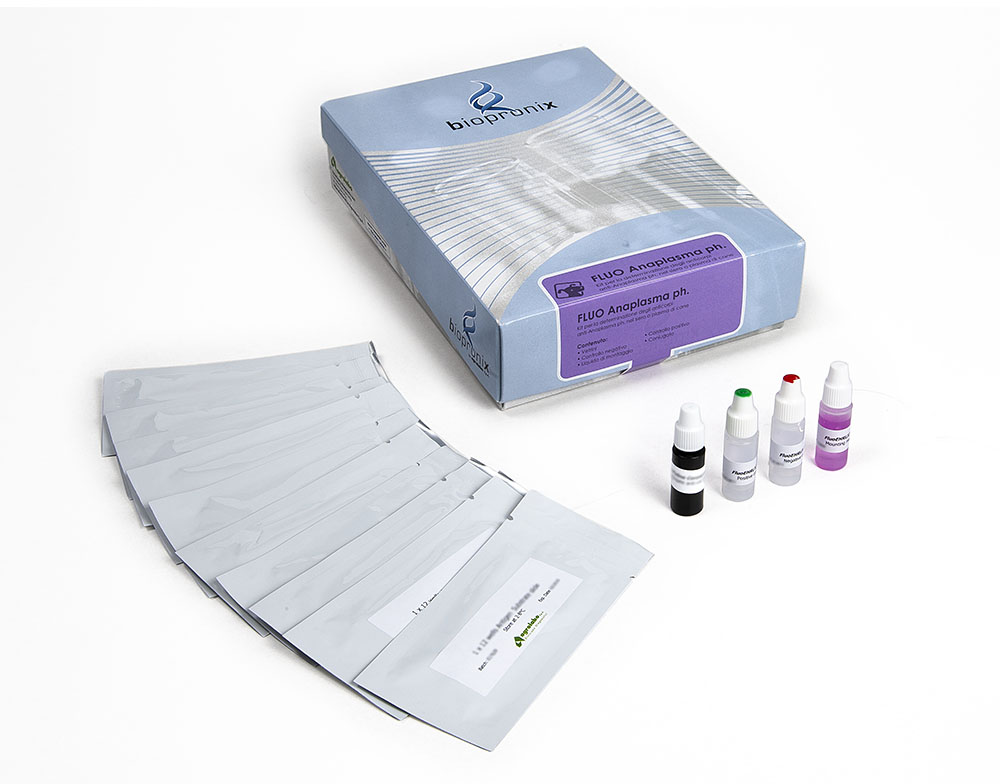
Fluo FLUO ANAPLASMA ph. DOG is a test based on the immunofluorescence technique for the detection of anti-Anaplasma phagocitophylum IgG antibodies in dog serum or plasma samples.
Canine Granulocytic Anaplasmosis, caused by the obligate intracellular bacterium Anaplasma phagocytophilum, represents a particularly interesting model for studying the interactions between the pathogen and the host immune system.
Unlike Ehrlichia canis, which predominantly infects monocytes, A. phagocytophilum primarily targets neutrophils, key cells of the innate immune system. Under physiological conditions, neutrophils have a very short half-life and play a vital role in the body's defenses through phagocytosis, the production of reactive oxygen species (ROS), and subsequent programmed apoptosis.
The latest scientific evidence demonstrates that A. phagocytophilum is capable of profoundly altering neutrophil function, creating an intracellular environment favorable for its survival and replication.
1.Modulation of Gene Expression: The Role of the AnkA Protein
One of the most studied aspects of A. phagocytophilum pathogenesis concerns the bacterium's ability to interfere with host cell gene expression regulation mechanisms.
- Type IV Secretion System (T4SS): To establish infection, A. phagocytophilum uses a Type IV Secretion System (T4SS), which transfers effector proteins directly into the neutrophil cytoplasm.
- AnkA (Ankyrin A) Protein: Among the main effector proteins identified is AnkA (Ankyrin A), which, after secretion, reaches the host cell nucleus and interacts with chromatin.
- Silencing of host defenses: Numerous studies have demonstrated that AnkA is capable of modifying the expression of numerous host genes through transcriptional and epigenetic regulation mechanisms. These alterations affect several cellular pathways involved in the immune response, contributing to reduced neutrophil activation and limiting its antimicrobial efficacy.
2.Inhibition of apoptosis and suppression of the oxidative burst
To complete its replication cycle, A. phagocytophilum must prolong the survival of the infected neutrophil and reduce its key microbicidal functions.
- Prolongation of cell survival: Infection modulates the mechanisms that regulate apoptosis, promoting the activation of anti-apoptotic pathways and reducing the activity of pro-apoptotic signals, including the caspase cascade. As a result, the infected neutrophil can survive significantly longer than its normal half-life, allowing the bacterium to complete its intracellular replication.
- Inhibition of the respiratory burst: An additional evasion mechanism involves reducing the neutrophil's ability to generate the respiratory burst, one of the main defense mechanisms of innate immunity. Under physiological conditions, activation of the NADPH oxidase enzyme complex leads to the production of high levels of reactive oxygen species (ROS), which are essential for eliminating phagocytosed microorganisms. A. phagocytophilum interferes with the assembly and function of this enzyme complex, reducing ROS production and compromising neutrophil microbicidal activity. This adaptation represents one of the main mechanisms through which the bacterium survives and multiplies within the host cell.
3.Acquisition of host lipids and immune evasion
Like other bacteria in the Anaplasmataceae family, Anaplasma phagocytophilum has an atypical cell wall, characterized by the absence of lipopolysaccharide (LPS) and the extremely low or absent presence of peptidoglycan. This peculiarity limits recognition by certain innate immune receptors, contributing to the microorganism's immune evasion mechanisms.
- Dependence on host cholesterol: A. phagocytophilum is unable to independently synthesize the sterols necessary for the stability of its cell membranes. Therefore, it exploits the host cell's lipid transport mechanisms, modifying the intracellular traffic of vesicles and promoting the recruitment of cholesterol-rich lipoproteins to the intracytoplasmic vacuole (morula) in which the bacterium replicates. The acquisition of cholesterol from the host is a fundamental step for the survival of the bacterium and helps maintain the integrity of the morula membrane. At the same time, infection causes alterations in neutrophil lipid metabolism, which appear to favor the maintenance of the intracellular environment necessary for bacterial replication.
4.Thrombocytopenia: A Multifactorial Pathogenetic Mechanism
Thrombocytopenia is one of the most common hematological abnormalities in Canine Granulocytic Anaplasmosis, although A. phagocytophilum predominantly infects neutrophils, not platelets. Available evidence indicates that the reduction in platelet count is the result of a combination of pathogenic mechanisms rather than direct invasion of platelets by the bacterium.
- Activation of the inflammatory response: Infection of neutrophils induces a complex immune response characterized by the production of inflammatory mediators and the activation of numerous immune system cells. This response contributes to the clinical manifestations of the disease and can affect platelet homeostasis.
- Platelet consumption and destruction: Several mechanisms may contribute to the development of thrombocytopenia, including endothelial activation and systemic inflammation, immune-mediated mechanisms (with production of antibodies directed against platelets) and transient alterations in thrombopoiesis and bone marrow function.
Bibliography
- Carlyon, J. A., et al. (2003) Invasion and survival strategies of Anaplasma phagocytophilum. Cell Microbiol. 5(11):743-54.
- Choi, K.S. (2005). Anaplasma phagocytophilum delay of neutrophil apoptosis through the p38 mitogen-activated protein kinase signal pathway. Infect Immun. 73(12):8209-8218.
- De Arcangeli, S., et al. (2018). Anaplasma phagocytophilum infection in thrombocytopenic dogs. Vet Ital. 54(1):73-78.
- Garcia-Garcia, J. C., et al. (2009) Epigenetic silencing of host cell defense genes enhances intracellular survival of the rickettsial pathogen Anaplasma phagocytophilum. PLoS Pathog. 5(6):e1000488.
- Rikihisa, Y. (2011). Mechanisms of obligatory intracellular infection with Anaplasma phagocytophilum. Clinical Microbiology Reviews, 24(3), 469–489.
- Sainz, Á., et al. (2015). "Guideline for veterinary practitioners on canine ehrlichiosis and anaplasmosis in Europe." Parasites & Vectors, 8, 75.
- Xiong, Q., et al. (2009) Cholesterol-dependent Anaplasma phagocytophilum exploits the low-density lipoprotein uptake pathway. PLOS Pathogens, 5(3), e1000329.
Most infections have nonspecific symptoms, such as:
- High fever
- Lethargy
- Loss of appetite
- Musculoskeletal pain or discomfort, characterized by reluctance to move, stiffness, weakness and lameness
- Rarely vomiting and diarrhea
If the disease is not treated, platelets and white blood cells deficiency, chronic joint pain and neurological symptoms (rare) occurs.